




لوائح تحصيل الديون في دولة الإمارات
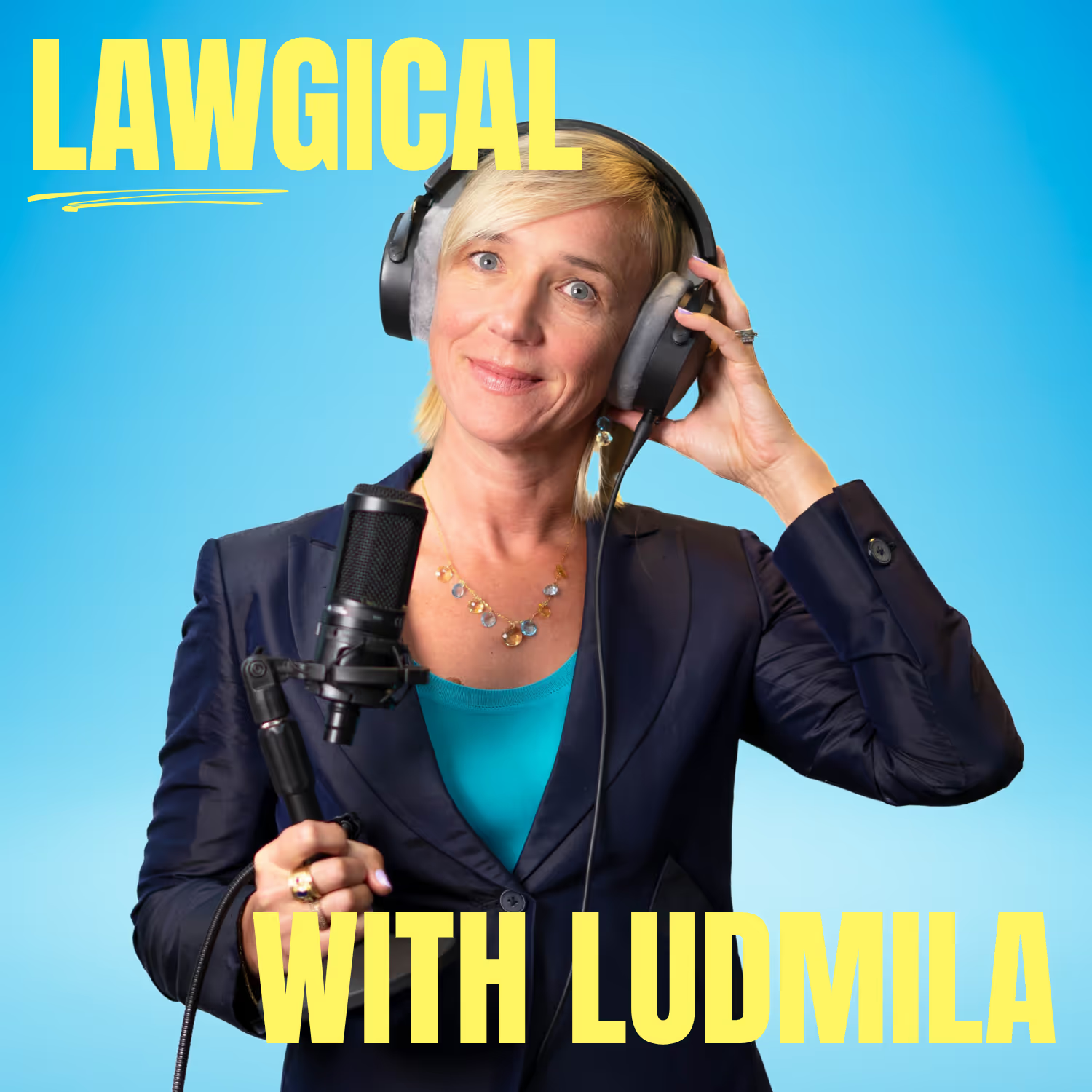
Welcome back to Lawgical with Ludmila, where we untangle legal knots so that you do not have to. I am Ludmila Yamalova, a United States qualified lawyer based in Dubai. In each episode, we break down complex law into clear and practical insights that you can actually use. Today we are tackling a subject many fear but few fully understand, debt collection in the UAE banking sector, especially from the perspective of consumer protection.
Life Happens and Defaults Occur
Let us face it, life does not always go according to plan. Jobs are lost, salaries are cut, businesses fail, or unexpected crises strike. For many, loans, whether home mortgages, auto loans, credit cards, or personal lines of credit, are among the first obligations to feel pressure when cash flow tightens. When the borrower begins to default, the relationship shifts. They are no longer just in arrears.
They are under legal, regulatory, and reputational scrutiny. For the banking industry, recovering that debt is a priority. For consumers, it can become a battle to preserve dignity, rights, and financial stability. That is why it is crucial for borrowers, and indeed all of us, to understand how the UAE banking sector handles defaults, how the Central Bank regulates debt collection, and what protections you as a consumer can have under the law.
At the outset, one thing is clear. While debt collection is legal, harassment and intimidation are not. This is a balancing act. Law is your ally, not just a hammer.
In today’s episode, we will:
- Unpack the regulatory framework governing consumer protection in banking.
- Explain the specific rules for debt collection practices both internal and via licensed agencies.
- Share real examples of unfair or illegal practices.
- Provide a clear summary of what is allowed, what is not, and how consumers can respond.
What Debt Collection Means in Practice
Before we do that, let me provide a bit of context. What is debt collection in simple terms. You take a loan, let us make it a car loan.
That car loan is based on your ability to repay it. That ability is tied to your current job and salary. Now you lose that job. You still have other obligations to pay, your housing and other life expenses. So the car is perhaps one of the last obligations that you believe is important for you to continue or that you even have means to service.
You are not able to pay your car loan on a monthly basis. The bank obviously wants and expects to receive a monthly payment for that car loan, and its whole financial system and internal systems are based on anticipated repayment of those facilities. When you are not repaying, the bank’s red flags go out internally.
Within the banking system they feel pressure and need to figure out what is going on with you, when you are going to start repaying your obligation, or whether you are going to be able to repay at all. That is all very typical, predictable, and reasonable to expect. When you fail to pay your financial obligations, the other side will start knocking on the door and asking questions, trying to get answers. How it is done is very important for us to discuss and understand. This is the purpose of this discussion.
Until recently there were not robust regulations that legal practitioners and consumers could refer to in order to protect how they are handled or how their data is handled by financial institutions in times of distress or financial difficulties.
The Obligation Remains, but Conduct is Regulated
We need to acknowledge that the debt obligation remains. It is a contractual obligation. That obligation still has to be repaid eventually. How your inability to pay that obligation is managed by the bank or by whoever the bank engages to help recover the loan is now very specifically and expressly governed by the UAE rulebook and the UAE regulations on consumer protection.
At a high level, it is not what it used to be.
- In the past, many would attest that when they fell behind on repayment they received calls, texts, emails, knocks on the door, packages, and even calls to the office.
- These tactics were used to pressure repayment and were common. Many consumers in distress experienced similar conduct.
The point of today’s discussion is to share that there are specific regulations in place now to govern debt collection practices in the UAE.
Regulatory Foundation
A. Core Legal Instruments
There is a series of laws that govern debt collection in the UAE. Debt collection is legal because the economy depends on repayment of obligations. There are specific regulations as to how it is to be done.
- Federal Law Number 14 of 2018
- Governs the Central Bank and the organization of financial institutions and activities.
- Grants the Central Bank authority to issue regulations and standards affecting licensed financial institutions.
- Consumer Protection Regulation
- Issued by the Central Bank under Article 121 of Federal Law Number 14 of 2018.
- Circular Number 8 of 2020, issued at the end of 2020.
- Sets out principles and obligations that licensed financial institutions must follow in dealings with consumers.
- Consumer Protection Standards
- Mandatory and enforceable in parallel with the regulation.
- Cover disclosure and transparency, complaint handling, market conduct, data protection, and collection practices.
- Must be read together with the regulation and other relevant rules including those on Sharia compliance where applicable.
These regulations and standards are included in the Central Bank rulebook.
B. The Rulebook
- The rulebook is extensive, about two thousand pages if printed.
- It is available on the Central Bank website in searchable, accessible form and is updated continuously.
- Specific sections such as consumer protection and debt collection are easy to find.
You will hear the terms Consumer Protection Regulation, Consumer Protection Standards, and rulebook used interchangeably. All are enveloped within the rulebook.
C. Market Conduct and Consumer Protection
Under the rulebook’s Market Conduct and Consumer Protection section:
- Articles two through fifteen cover essential consumer rights, institutional oversight, complaint resolution, financing practices, and enforcement.
Key point
A licensed financial institution must respect consumer rights, especially when default happens. Banks must act fairly and ethically even when the consumer is in default.
Context and evolution
In the past, consumers in default were treated as wrongdoers and placed on the defensive. The new regulatory reality imposes specific protocols and obligations on banks and financial institutions regarding how they must conduct themselves with consumers.
D. Scope and Goal
These frameworks establish:
- A comprehensive set of rights for consumers.
- A comprehensive set of obligations for financial institutions.
- Application to all licensed banks, finance companies, and debt collection agents operating under their authority.
The goal is simple. Banks must act fairly, transparently, and responsibly in all dealings with consumers.
Debt Collection Practices Under the Rulebook
A. Legitimacy and Constraints
The rulebook recognizes debt collection as a legitimate financial activity governed by strict consumer protection requirements similar to those that apply to all financial institutions.
Historical note
Until recently there was no specific licensing activity called debt collection. Many so called debt collectors operated without proper licensing and would have been operating illegally under current standards.
B. Dedicated Provision
Under the Consumer Protection Regulation and Standards, section 5.25 in the rulebook sets out the framework for recovering overdue debts.
C. Key Rules Banks Must Follow
- Written Policies and Procedures
- Banks must maintain documented, detailed debt collection protocols used to train agents and govern conduct.
- Early Dialogue and Documentation
- Banks must, to the extent reasonably possible, discuss financial difficulties with the consumer before moving to collection or legal proceedings.
- These discussions must be documented.
- If you are served with a court case without such steps, lack of documentation can evidence a breach by the bank.
- Thirty Day Arrears
- If an account is in arrears for thirty days after the due date, the bank must communicate with the consumer or authorized representative to understand reasons and explore repayment options.
- Sixty Day Arrears and Formal Written Notice
- If arrears exceed sixty days, the bank must issue a formal written notice containing:
- The date when default began.
- The number and amount of missed payments.
- The interest or profit rate.
- The fees charged.
- A request that the consumer engage to remedy arrears.
- Name and contact information of the bank’s collection department or authorized agent.
- Consequences of continued nonpayment such as legal proceedings, sale of collateral, or engaging guarantors.
- If arrears exceed sixty days, the bank must issue a formal written notice containing:
- Written Breakdown Requirement
- It is not sufficient to assert a lump sum owed.
- The bank must provide a clear breakdown of principal, interest, penalties, and fees so the consumer can understand the total amount.
- Monthly Updated Notices
- If arrears persist, banks must send monthly updated notices that show:
- Allocation of payments among interest, principal, and fees.
- The updated balance.
- If arrears persist, banks must send monthly updated notices that show:
- Proportionate Communications
- Communications must be proportionate and not excessive.
- Permissible methods include email, SMS, phone, and mail, only through channels officially registered with the bank.
- Prohibited Communication Conduct
- No home or workplace visits without consent.
- No communications outside nine in the morning to eight in the evening.
- No unreasonable or excessive contact attempts.
- Multiple calls in a single day relating to the same loan can be excessive.
- Record Keeping
- All communications in the context of debt collection must be recorded and retained for five years after settlement or write off.
- Consumers should document their own records as well.
- Use of Third Party Collection Agents
- If a bank uses a third party agent, it must inform the consumer in writing of:
- هوية الوكيل.
- السلطة الممنوحة.
- المبلغ المصرح بالتحصيل.
- للرهون العقارية متطلبات إضافية، بما في ذلك التحذيرات المتعلقة باستعادة الممتلكات والإجراءات القانونية.
- If a bank uses a third party agent, it must inform the consumer in writing of:
د- وكالات تحصيل الديون المرخصة
- التعيين والترخيص
- يسمح كتاب القواعد للبنوك بتعيين وكالات تحصيل ديون طرف ثالث مرخصة، المشار إليها في الفقرة 5.25.8.
- يجب أن تمتثل جميع هذه الوكالات لنفس المعايير القانونية والقيود والالتزامات مثل البنوك.
- المشهد الحالي
- حتى الآن، استنادًا إلى الأبحاث المشار إليها في المناقشة، هناك وكالة واحدة على الأقل لتحصيل الديون مرخصة في الإمارات العربية المتحدة ومرخصة على وجه التحديد كوكالة تحصيل ديون، وهي Speed Management Debt Collection المعروفة باسم SMDC في أبو ظبي.
- تم ذكر وكالات أخرى مثل House of Debt Collection و A to Z Debt Collection ولكن لم يتم التحقق منها.
- يجب على المستهلكين الذين اتصلت بهم الوكالات المطالبة طلب إثبات الترخيص وإثبات التعيين من قبل المؤسسة المالية.
- سلوك الوكالة يعكس التزامات البنك
- تعمل الوكالات كوكلاء للبنوك ويجب أن تلتزم بسياسات البنوك والقيود التنظيمية.
- لا تملك الوكالات ترخيصًا مستقلاً للتصرف بشكل مسيء.
- مسؤوليات البنك عند إشراك الوكالات
- يجب على البنك إبلاغ المستهلك كتابيًا بهوية الوكالة ونطاق السلطة والمبلغ الذي قد تجمعه.
- يجب أن تتوافق تفاعلات الوكالة مع الحدود الزمنية، وعدم الزيارات غير المصرح بها، وعدم المكالمات المفرطة، وعدم الإفصاحات غير الصحيحة.
- حماية البيانات والسرية
- تتطلب المادة 6 بشأن حماية بيانات المستهلك وأصوله الخصوصية والسرية التامة.
- يجب على الوكالات والبنوك شرح كيفية معالجة البيانات والحد من الإفصاحات لضمان الأمان.
- يجب الاحتفاظ بسجلات جميع الاتصالات لمدة خمس سنوات.
- المساءلة
- تعود الشكاوى ضد الوكالة إلى آلية الشكاوى الخاصة بالبنك.
- لا يمكن للبنك التهرب من المسؤولية من خلال الإشارة إلى الوكالة.
- تُنسب أفعال الوكلاء إلى المدير.
مثال الحالة والانتهاكات
ألف - خلفية الحالة
لدى المستهلك دين غير مدفوع يعود تاريخه إلى عام 2018. كان الدين الأصلي ثلاثين ألف درهم. تم سداد جزء من المبلغ وتم الحصول على قرض آخر لتغطية القرض الرئيسي. يقوم وكيل تحصيل الديون الآن بمتابعة السداد نيابة عن البنك.
باء - الخروقات المصرفية المرصودة
- عدم تقديم خطاب يلخص الالتزام والغرامات والفوائد وعدد المدفوعات المتأخرة.
- لا يوجد جهد لاستكشاف خطة لإعادة الهيكلة على الرغم من التوظيف المستقر للمستهلك.
- لا يوجد تفسير واضح للمجموع المتميز ومكوناته.
- لا يوجد إخطار كتابي بتعيين وكالة طرف ثالث أو المبلغ المصرح بالتحصيل.
جيم- انتهاكات الوكالة التي تمت ملاحظتها
- مكالمات مفرطة، حوالي ستين إلى سبعين في شهر واحد، من ستة أرقام مختلفة على الأقل من مختلف الولايات القضائية.
- رسائل البريد الإلكتروني إلى البريد الإلكتروني الخاص بعمل المستهلك على الرغم من أنها ليست قناة مسجلة لدى البنك.
- التهديدات بما في ذلك القائمة السوداء وحظر السفر ومذكرات الاعتقال.
- الإفصاح إلى صاحب عمل المستهلك والإدارة العليا والموارد البشرية وزملاء العمل فيما يتعلق بالقرض الشخصي، بما في ذلك تفاصيل الدين.
دال- الآثار القانونية للسلوك
- التحرش والإكراه.
- التهديدات القانونية ذات الآثار المحتملة على القانون الجنائي.
- الكشف عن المعلومات السرية.
- انتهاك الخصوصية والتشهير المحتمل.
- الانتهاكات بموجب اللوائح المالية وقانون العقوبات وقانون الجرائم الإلكترونية وقانون حماية البيانات.
التدريب المؤسسي والحوكمة
- تتطلب اللوائح أن يتم تدريب ممثلي البنوك على الممارسات المسؤولة وأن يكونوا مسؤولين.
- يجب على المؤسسات المالية توظيف الموظفين المناسبين، وتوفير التدريب القانوني على ما يمكن وما لا يمكن القيام به، وضمان التزام وكلاء الطرف الثالث بنفس اللوائح.
ما هو قانوني ومطلوب
- يجب أن يكون لدى البنوك سياسات موثقة لتحصيل الديون.
- يجب على البنوك التواصل مع المستهلكين الذين لديهم متأخرات وفهم الأسباب وتقديم المساعدة قبل اتخاذ إجراءات صارمة.
- يجب أن تكون الإشعارات في الوقت المناسب وتتضمن الكشف الكامل عن تفاصيل المتأخرات والعواقب ومعلومات الاتصال.
- يجب أن تُظهر البيانات الشهرية تخصيص المدفوعات والرصيد المحدث والرسوم المستحقة أو الفوائد.
- لا يجوز استخدام الوكالات الخارجية إلا بعد إخطار المستهلك وضمن قيود محددة.
- يجب أن تكون الاتصالات متناسبة، في غضون الساعات المسموح بها، وعبر القنوات المعتمدة.
- يجب ضمان سرية البيانات والتعامل السليم من قبل أي وكيل.
- يجب الاحتفاظ بالسجلات لمدة خمس سنوات بعد التسوية أو الشطب.
ما هو محظور
- مكالمات مزعجة خارج الساعات المسموح بها أو بتردد مفرط.
- زيارات غير مصرح بها للمنزل أو مكان العمل.
- الكشف عن الديون لأطراف ثالثة أو الجيران أو زملاء العمل.
- عدم إخطار المستهلكين بوكلاء الطرف الثالث وحقوقهم.
- فرض رسوم أو فرض عقوبات لم يتم الكشف عنها بوضوح في العقد والإشعار.
- عدم تقديم بيانات مفصلة حول كيفية تخصيص المدفوعات.
- استخدام بيانات المستهلك لأغراض غير مصرح بها.
- رفض النظر في مشقة المستهلك أو رفض الحوار قبل التصعيد القانوني.
- تدمير السجلات المطلوبة أو الفشل في الاحتفاظ بها.
خلاصة القول
لا يحول القانون المستهلك إلى كيس تثقيب. يجب أن تكون عملية التحصيل منظمة وعادلة وشفافة.
الشكاوى وسبل الانتصاف
أ. شكوى مصرفية داخلية
- يجب أن يحتفظ كل بنك مرخص بوحدة شكاوى المستهلكين بموجب المادة 8 من قواعد سلوك السوق وحماية المستهلك.
- يمكن تقديم الشكاوى كتابيًا أو عبر الإنترنت.
- يجب على البنك الإقرار والتحقيق والرد في غضون إطار زمني محدد، عادةً ثلاثين يومًا.
- يجب أن تكون جميع الردود موثقة وشفافة.
باء - التصعيد إلى البنك المركزي
- في حالة عدم الرضا عن استجابة البنك، يمكن للمستهلكين التصعيد إلى إدارة حماية المستهلك في البنك المركزي عبر بوابة حماية المستهلك على موقع البنك المركزي.
- يمكن للبنك المركزي التحقيق في الانتهاكات وإصدار التحذيرات والعقوبات والعقوبات المالية ضد البنوك أو الوكالات.
- عملية الشكوى مجانية وسرية ومصممة للمستهلكين لاستخدامها بدون محامين.
جيم- سبل الانتصاف المدنية والجنائية
- يمكن رفع الدعاوى المدنية بسبب التشهير أو خرق السرية أو الضيق العاطفي أو الخسارة المالية الناجمة عن إجراءات التحصيل غير القانونية، مع طلب التعويض من خلال المحاكم المدنية.
- إذا هدد وكيل التحصيل بالعنف أو الابتزاز أو الكشف عن معلومات خاصة بشكل غير قانوني، فإن سبل الانتصاف موجودة بموجب القانون الجنائي ويمكن تقديم شكوى من الشرطة للتحقيق والمقاضاة.
- يمكن الاستعانة بمستشار قانوني إذا لزم الأمر، ولكن الهدف هنا هو تجهيز المستهلكين لإدارة جزء من العملية بأنفسهم.
الخلاصة ونقاط عمل المستهلك
لا يجب أن يكون تحصيل الديون في الصناعة المصرفية معركة من جانب واحد. إن الإطار التنظيمي لدولة الإمارات العربية المتحدة من خلال لائحة حماية المستهلك للمصرف المركزي ومعايير حماية المستهلك وقواعد تحصيل الديون في كتاب القواعد يخلق حواجز حماية قوية لحماية المستهلكين حتى مع سعي البنوك للسداد.
بالنسبة للمستهلكين الذين يواجهون التخلف عن السداد:
- راقب كيفية تواصل البنك معك.
- الإصرار على الإشعارات المكتوبة والإفصاح الكامل.
- لا تقبل السلوك الذي ينتهك المعايير التنظيمية.
- قم بتوثيق كل شيء بما في ذلك المكالمات والأوقات والأسماء.
- تقديم شكاوى داخلية.
- قم بالتصعيد إلى البنك المركزي إذا لزم الأمر.
- استشر المستشار القانوني في حالة تصاعد النزاع.
هذا كل شيء عن هذه الحلقة من Lawgical مع لودميلا. إذا وجدت هذه الحلقة مفيدة وأعجبك ما نقوم به، يمكنك العثور على المزيد على موقعنا، lylawyers.com. نحن أيضًا على آبل بودكاستس و سبوتيفي، وللحصول على التجربة الكاملة، يمكنك مشاهدة بودكاست الفيديو الخاص بنا على YouTube. حتى المرة القادمة، ابق على اطلاع، ابق آمنًا، واجعل الأمور منطقية.
.png)